A bakery-scented journey from Paris to Provence
From the first baguette of the morning to the long dinner table, from the boulevards of Paris to the châteaux of the Loire and the lavender fields of Provence. A guide to travelling France through its food culture.
November 13, 2026 · 2 min read
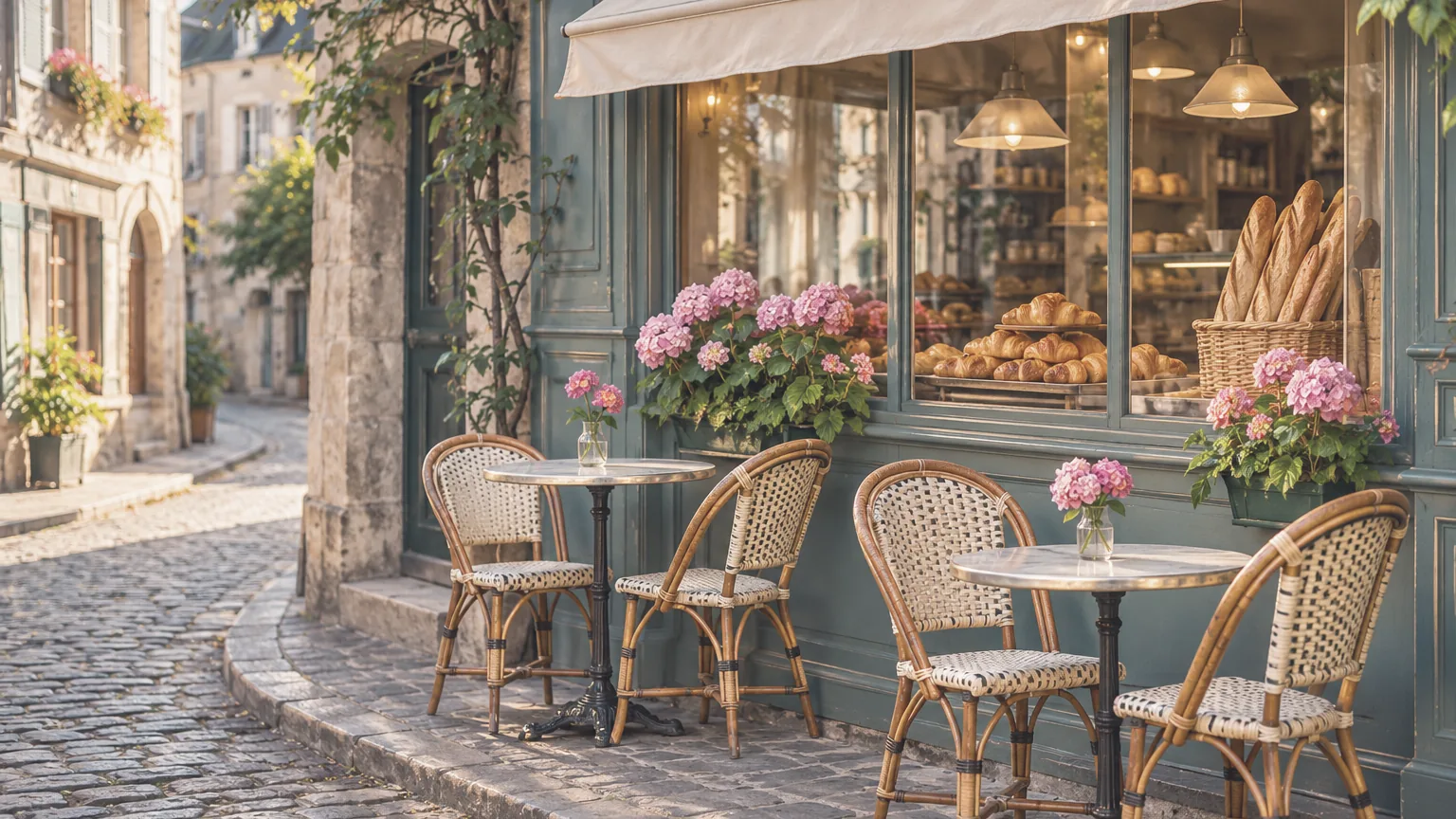
The easiest way to understand France is to join the morning queue outside a bakery. People walking home with a baguette under their arm tell you from day one that food here is about much more than eating. This guide visits France's best-known stops around that table.
Paris: boulevards, museums, neighbourhoods
The Eiffel Tower was built for the 1889 World's Fair and, though meant to be temporary, became the symbol of the city. The banks of the Seine are a UNESCO World Heritage Site; walking along the river shows you the history of Paris in one sweep, from the Louvre to Notre-Dame.
But the real flavour of Paris is in its neighbourhoods: the steep streets of Montmartre, the courtyards of the Marais, afternoons spent on corner café terraces. In Paris, a café is for sitting and watching the world go by.
The Loire Valley: land of châteaux
South-west of Paris, the grand Renaissance châteaux line the River Loire. Chambord, Chenonceau and dozens more, surrounded by vineyards and gardens, make the valley one of France's most elegant routes. The stretch of the Loire Valley between Sully-sur-Loire and Chalonnes is a UNESCO World Heritage Site.
Provence and the Mediterranean coast
Provence, in the south, is known for its stone villages, olive groves, markets and the lavender fields that turn purple in early summer. Lavender is usually at its best between late June and July.
A little to the east the Côte d'Azur begins: the Promenade des Anglais along the seafront in Nice shows why the Mediterranean light has inspired so many painters.
Mont-Saint-Michel and Normandy
In the north-west, Mont-Saint-Michel rises from a rocky island surrounded by tides — one of the most striking sights in France and a UNESCO World Heritage Site. Normandy's green countryside, apples and butter find their way onto the table too.
The table: baguettes, croissants and long lunches
The gastronomic meal of the French — how a table is set, the order of courses, how it is shared — was added to UNESCO's Intangible Cultural Heritage list in 2010. In 2022, the artisanal know-how and culture of baguette bread joined the same list.
The boulangerie sells bread, the pâtisserie cakes and pastries; a croissant or pain au chocolat for breakfast, an éclair or a tart in the afternoon. Lyon is often called the gastronomic capital of France, and its traditional eateries are known as bouchons.
Good to know
- Getting around: high-speed TGV trains connect Paris with the major cities.
- Greetings: saying 'Bonjour' when you walk into a shop is where good manners begin.
- Seasons: spring and autumn for the cities, early summer for Provence.